
A good fried dish is easy to recognize: it should be golden, crispy and dry, with a coating that adheres well and an interior cooked just right.
It may seem simple, but achieving a truly successful result requires a few precautions. The quality of the ingredients matters, but it is often above all temperature, preparation and cooking times that make the difference.
Where to start: dry food and an even coating
Before coating the food, it is important to make sure it is thoroughly dry. Excess moisture can make it more difficult for the coating to adhere and compromise the final crispiness.
Depending on the recipe, the coating can be made with flour, egg and breadcrumbs, or with simpler or richer variations. The goal is to achieve an even layer, without excess.
Lightly pressing the breadcrumbs helps them adhere better, but without creating a layer that is too thick: an excessive coating can become heavy and overpower the flavour of the main ingredient.
Which oil should you choose for frying?
The choice of oil also affects the final result. For frying, it is important to use an oil that can withstand high temperatures well and has a fairly neutral flavour that does not overpower the ingredients.
One of the most commonly used options is peanut oil, which is particularly suitable for frying thanks to its good stability at high temperatures and delicate flavour. High-oleic sunflower oil can also be used, while oils with a stronger flavour can have a greater influence on the taste of the dish.
Extra virgin olive oil can also be used for frying and is stable at the temperatures normally used in cooking, but its more intense aromatic profile may not be ideal for every recipe.
The right temperature
For many fried preparations, the ideal temperature is generally between 170 and 180 °C. At this temperature range, the outside can brown quickly, limiting excessive oil absorption while keeping the surface crispy.
For larger foods or those requiring a longer cooking time, it may be preferable to start at a slightly lower temperature, around 160–170 °C, allowing the inside to cook properly as well.
It is also important to prevent the oil from starting to smoke: this means the temperature has become too high. For greater precision, especially when frying several batches, a kitchen thermometer is the simplest way to keep the temperature under control.
Finally, it is better to fry only a few pieces at a time: adding too much food at once quickly lowers the oil temperature and can make the fried food less crispy and greasier.
Fry a few pieces at a time
Overfilling the pan is another common mistake.
When many pieces of food are added at the same time, the oil temperature can drop quickly. The result? A less even and heavier fry.
It is therefore better to cook only a few pieces at a time, leaving them enough space and waiting for the oil to return to the correct temperature before proceeding with the next batch.
How to make the coating more interesting
The coating does not necessarily have to consist only of breadcrumbs.
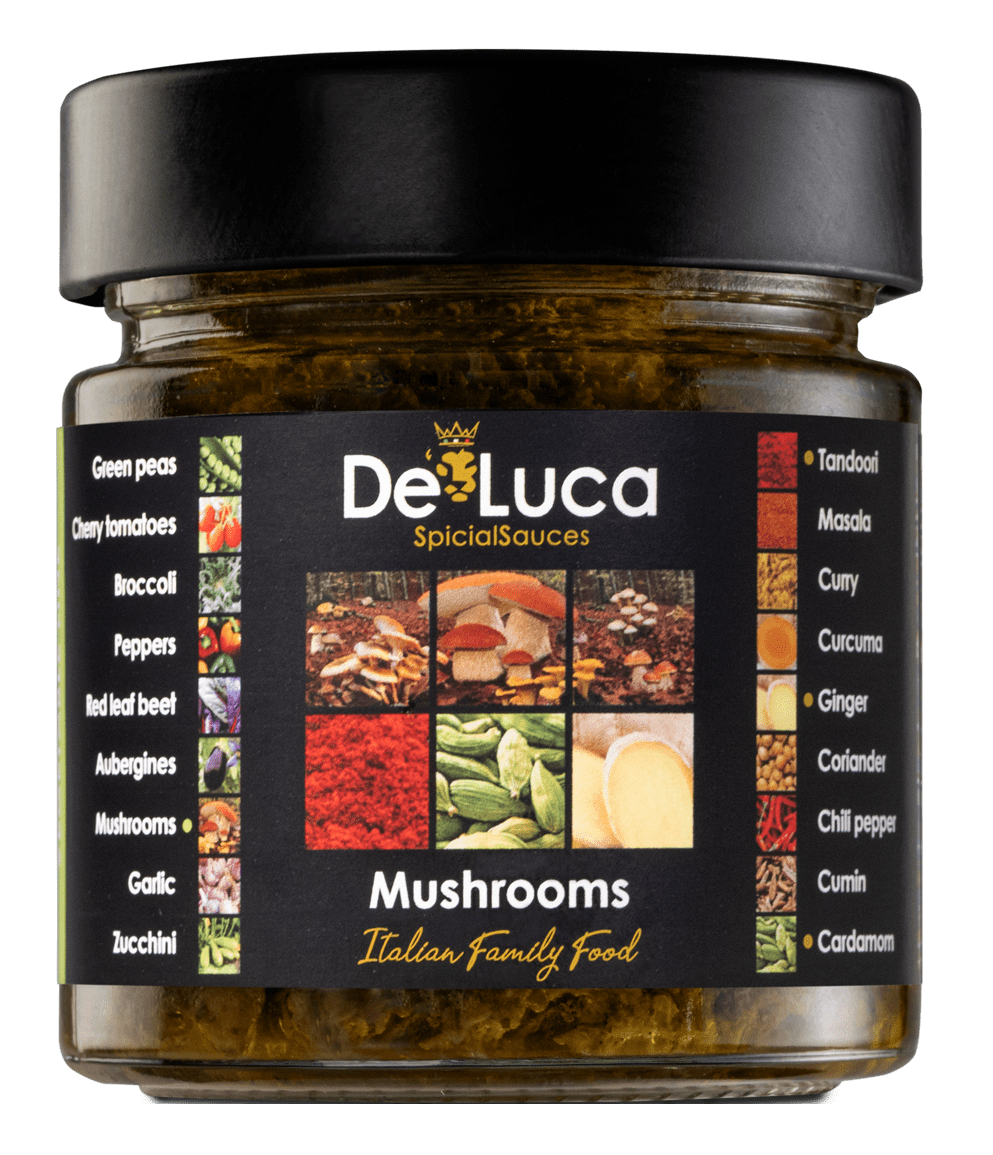
Herbs and spices can turn it into a true element of the recipe. Parsley, rosemary or dried herbs can add aroma, while spices such as curry, coriander, chilli or tandoori can create a bolder and more original flavour.
The secret is always balance: the aromatic component should enhance meat, fish, vegetables or cheese without becoming predominant.
Ingredients such as grated cheese or chopped nuts can also be added to the breadcrumbs to achieve different textures and flavours.
Put these tips into practice
Theory is important, but the best way to learn is to get into the kitchen. In our recipe collection, you will find several dishes where coating, batter and the correct cooking temperature really make a difference.
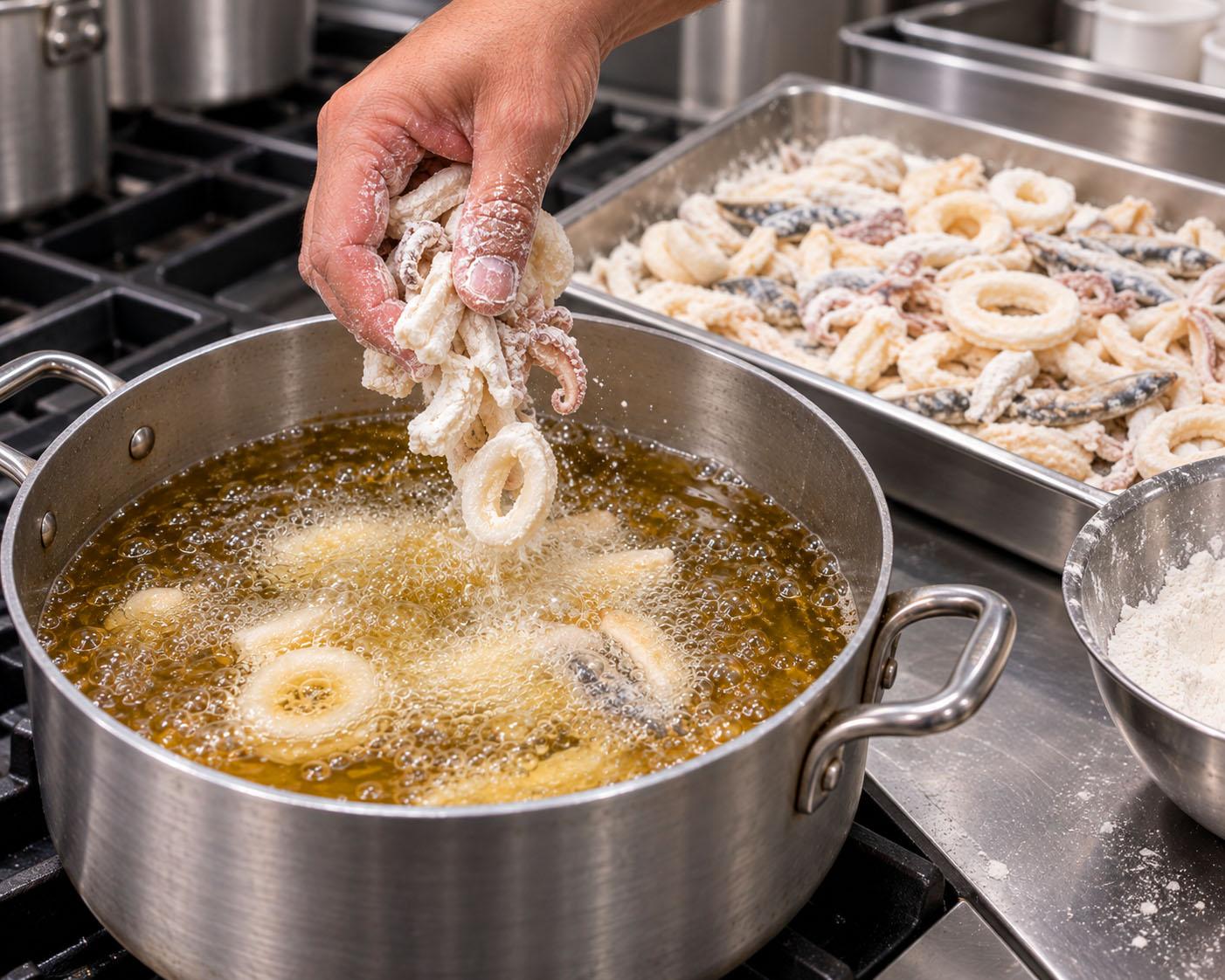
You can start with Mixed Fried Seafood, where thoroughly drying the ingredients and keeping the oil at around 170–180 °C helps achieve a crispier and lighter fry.
Or try the Pork Cutlets, a simple preparation where paying attention to the coating and cooking only a few pieces at a time helps achieve a beautifully golden surface.
Another great classic is Mozzarella in Carrozza, where an even coating and the correct oil temperature help create a crispy, golden surface while keeping the inside soft and stringy.
If you want to experiment with a crispy coating without frying, the Oven-Baked Breaded Lamb Chops show how breadcrumbs, herbs and chilli can create a flavourful crust even when baking in the oven.
Finally, for a more delicate preparation, you can try Fried Zucchini Flowers, made with a batter based on flour and cold sparkling water and fried until golden and crispy.
Four different recipes, four opportunities to put the same principles into practice: careful coating, the correct temperature and attention to cooking times.
After frying: what to do
Once ready, the food should be drained quickly and placed on paper towels or a wire rack to remove excess oil.
It is best to serve it immediately: it is during the first few minutes that the coating retains its maximum crispiness.
Good frying, therefore, does not depend on the oil alone. It is the result of a series of small steps: thoroughly drying the ingredients, creating a balanced coating, controlling the temperature and frying only a few batches at a time.
And just as with spices, it is often attention to detail that transforms a simple preparation into something truly special.