
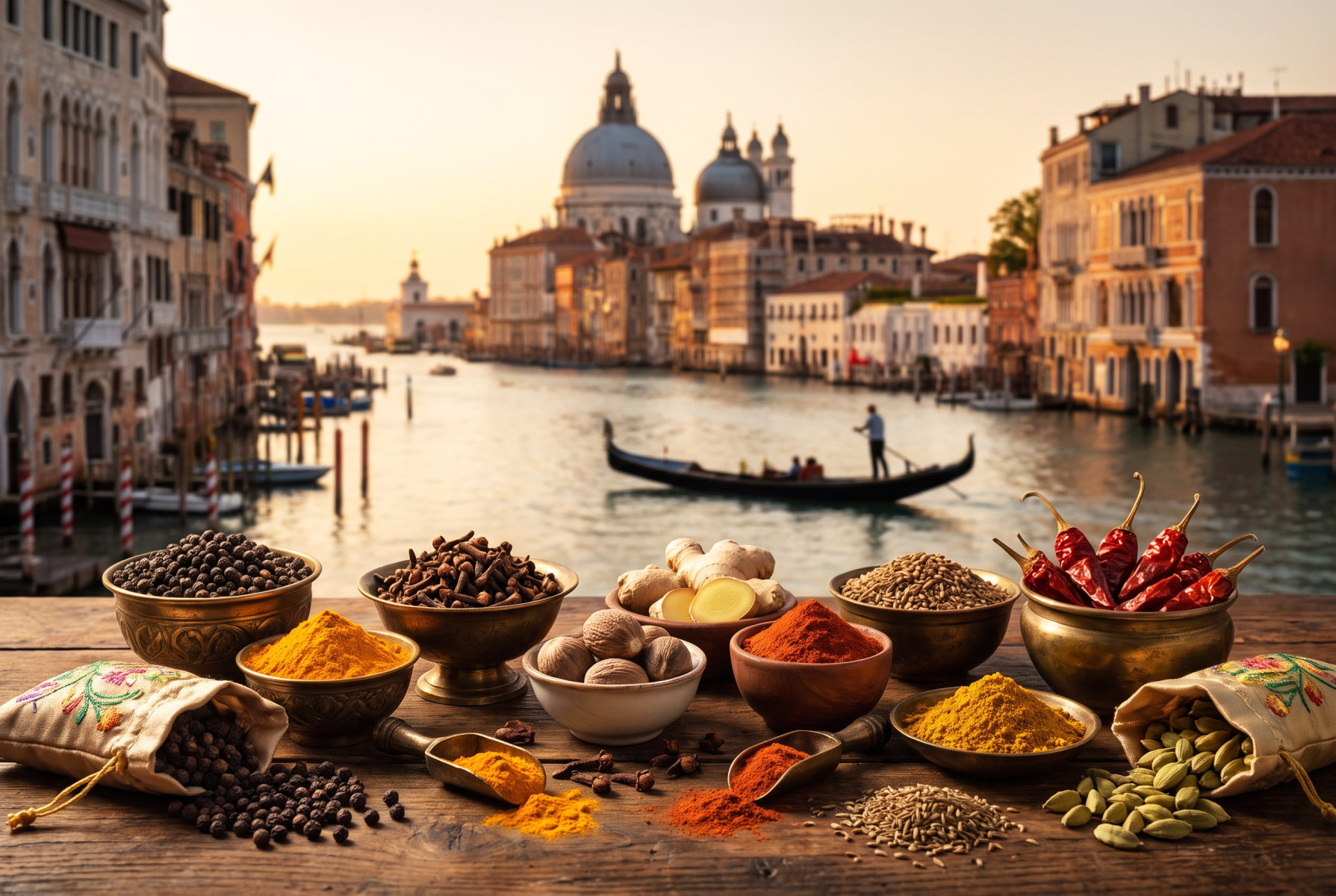
For centuries, Venice was not only one of Italy’s most fascinating cities, but also a major meeting point for cultures, goods and traditions from distant lands.
Its location on the Mediterranean made it a key player in an extensive trading network with the East. Along the routes travelled by merchants, fabrics, fragrances, precious objects and, above all, spices made their way across the world, gradually transforming the way people cooked in Europe as well.
Pepper, cinnamon, cloves, nutmeg and ginger arrived from faraway lands after long journeys, passing through various markets and ports before reaching Venice.
Today, we can easily find them in our kitchen cupboards, but for centuries they were rare, precious and deeply fascinating products.
The “spice route” was not a single road
When we talk about the spice route, it is easy to imagine a single path connecting East and West.
In reality, it was a much more complex network of land and sea routes, along which goods passed from one region to another and from one merchant to the next.
Venice occupied a privileged position within this system. Spices arrived in the lagoon city from the ports of the eastern Mediterranean and were then distributed throughout numerous regions of Italy and Europe.
Trade, however, brought more than just products: alongside the goods travelled ideas, customs and culinary knowledge.
Why were spices so valuable?
Their value did not depend solely on the distance they travelled.
Spices made it possible to add fragrances, intensity and entirely new flavour nuances to dishes. They could accompany meat and fish, be used in sauces, desserts and drinks, and create combinations that had previously been little known.
Moreover, precisely because they were rare and expensive, some spices eventually became symbols of prestige.
Their arrival therefore helped gradually expand the aromatic heritage of European cuisines and fostered growing curiosity about ingredients from different cultures.
When tradition meets something new
The history of spices also tells us something important about Italian cuisine: tradition has never been entirely unchanging.
Many ingredients, techniques and pairings that we now consider familiar are the result of centuries of travel, trade and cultural encounters.
Venice perfectly illustrates this process.
An ingredient from a distant land did not necessarily have to replace what was already there. Instead, it could complement existing ingredients, alter their flavour profile and offer a new interpretation.
A spice can add depth to a sauce, bring freshness, create a warm note or introduce an unexpected contrast.
Above all, spiced does not necessarily mean spicy: every spice has its own characteristics, and the result depends on how it is measured and combined with other ingredients.
From Venice to India: a story that hits close to home
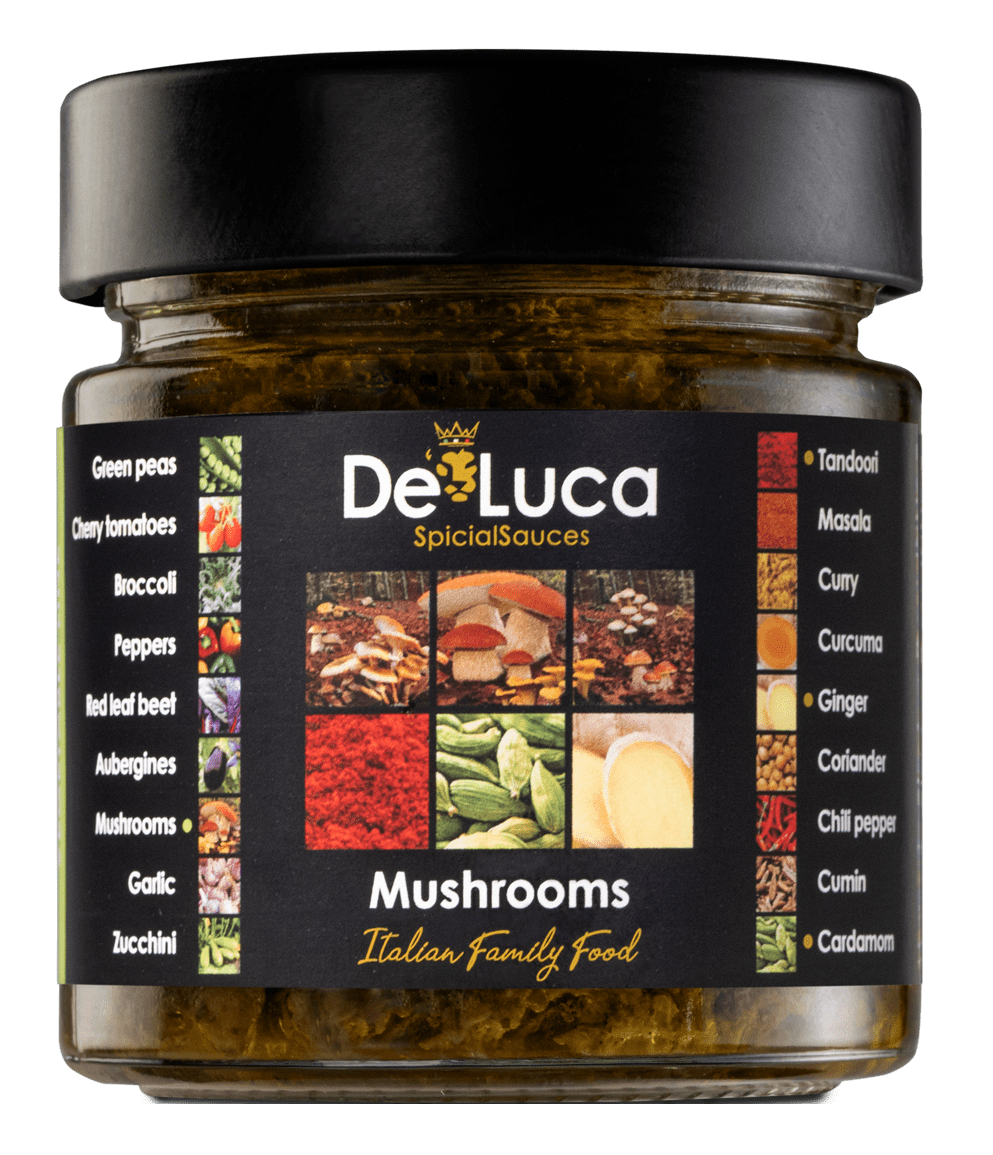
For De Luca Family Food, this encounter between Italy and the East is more than just a chapter in culinary history.
Founder Alessio De Luca is from Venice, and his connection with the world of spices also grew through travel.
In the late 1990s, during a stay in India that took him to Bombay, Delhi and Goa, he explored ingredients such as turmeric, tandoori, cumin, curry and cardamom in greater depth. In the article published by Cook – Corriere della Sera, Alessio explains that returning from India changed the way he understood and approached cooking.
The idea was not to abandon Italian tradition, but to use it as a starting point to experiment, blend influences and explore new combinations. This research would eventually lead to the philosophy behind Spicial Sauces, built around the meeting of familiar ingredients from Italian cuisine and carefully selected, thoughtfully balanced spice blends.
An encounter that continues at the table
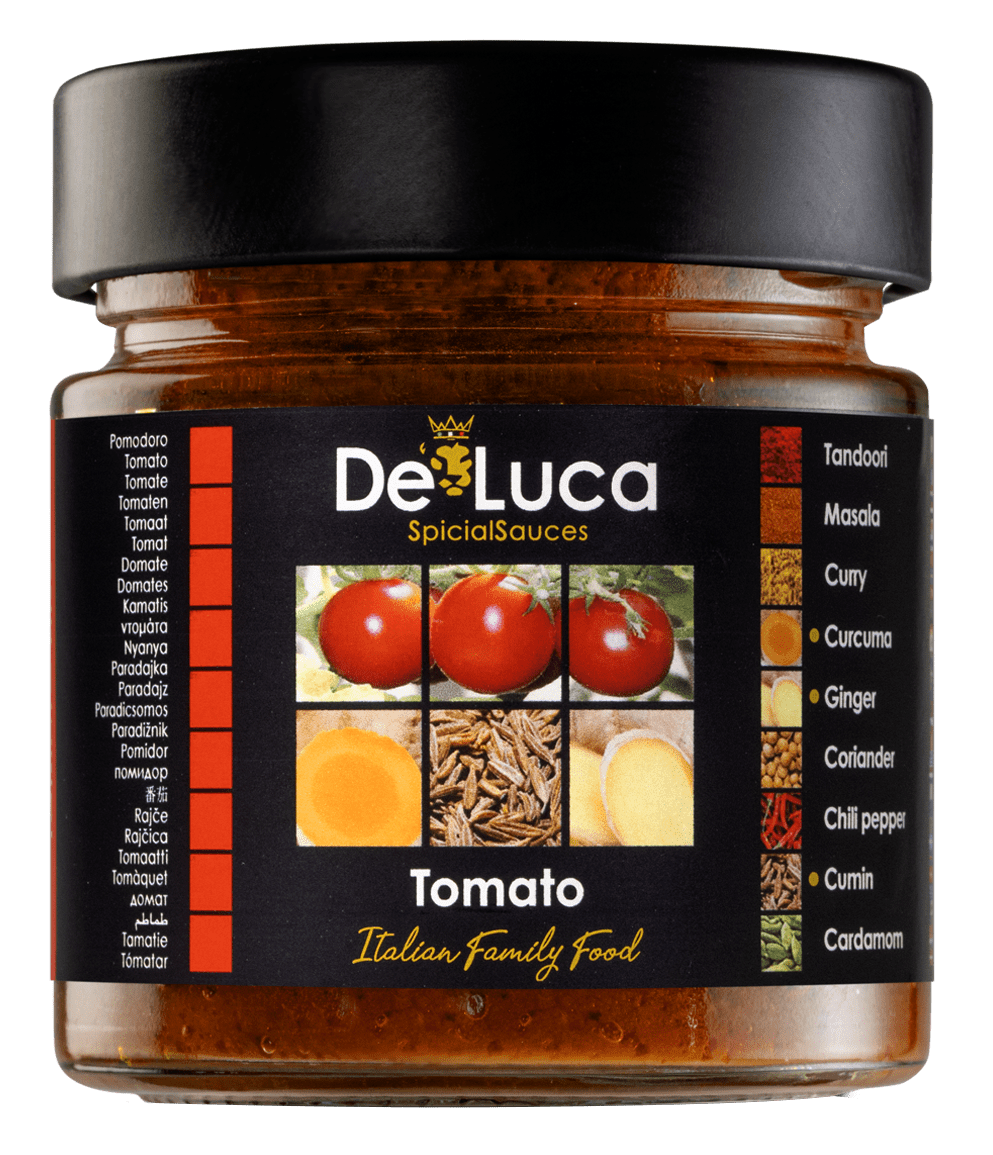
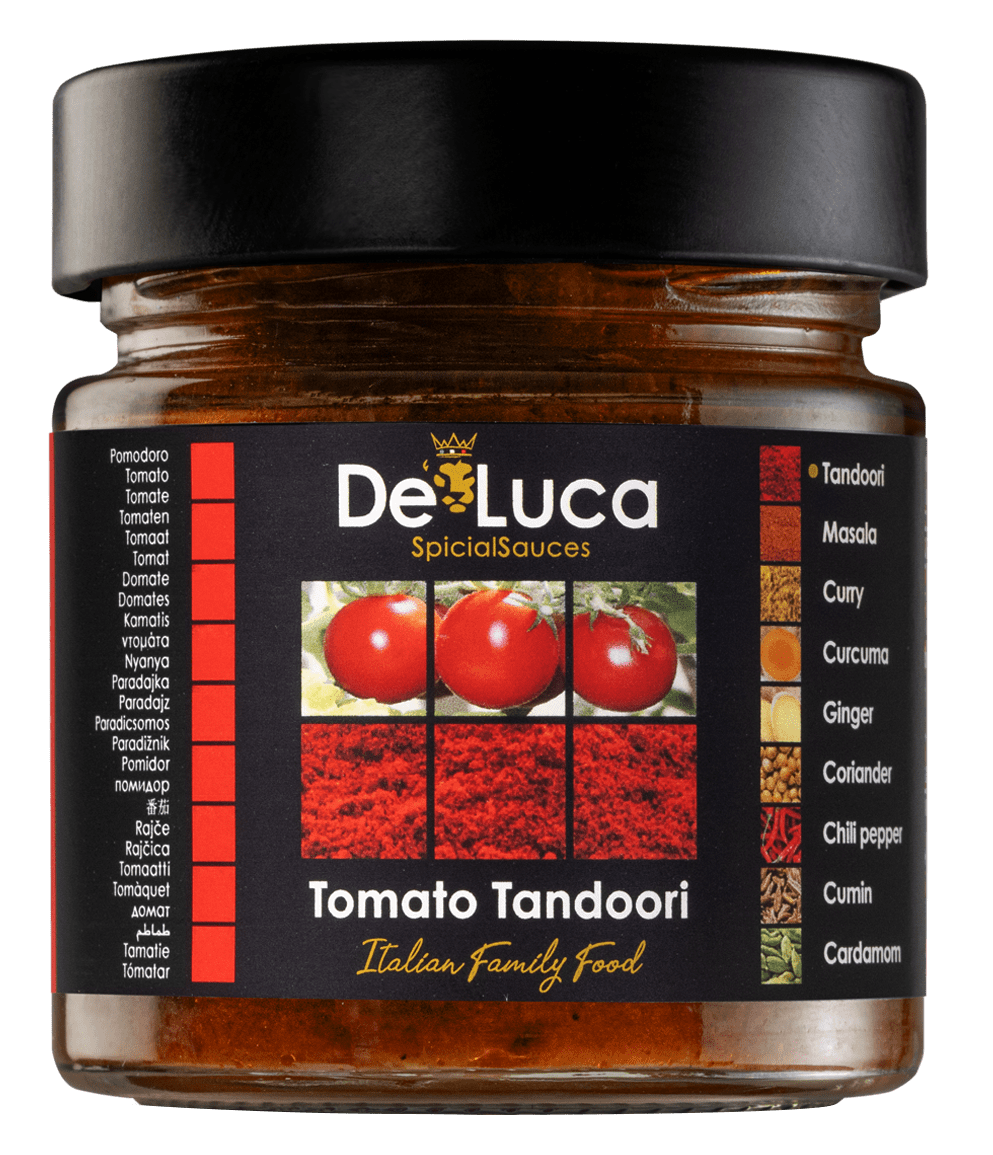
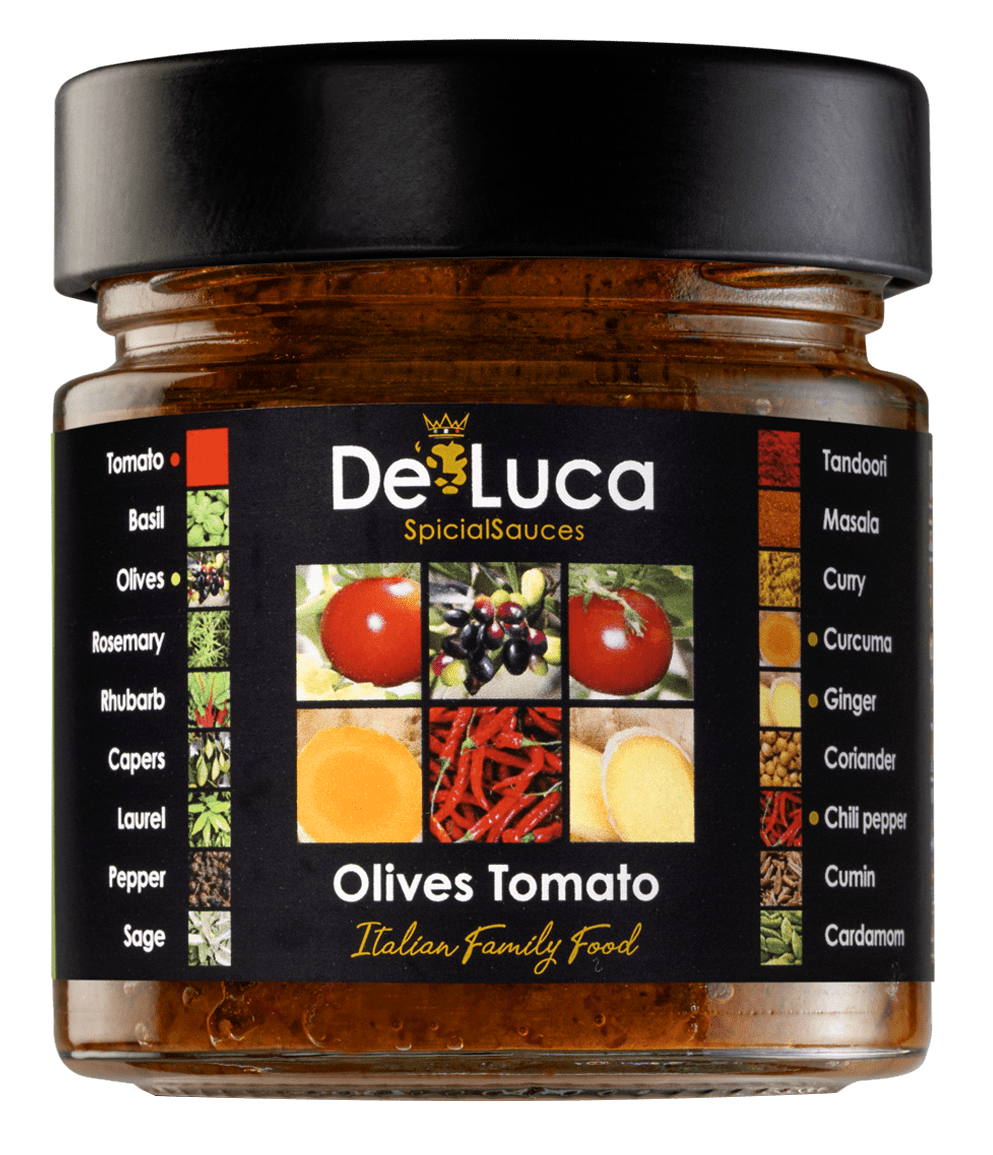
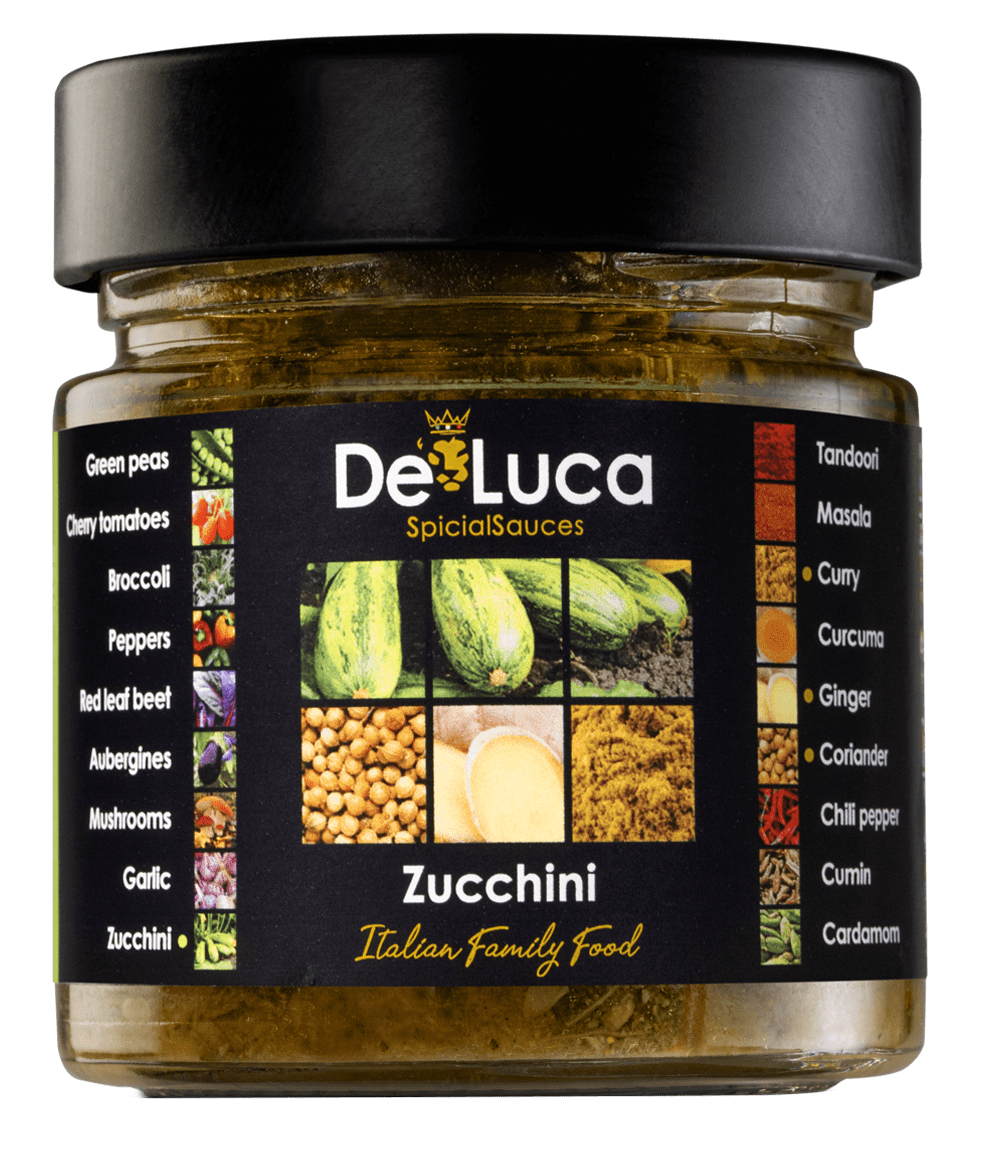
Tomatoes, olives, courgettes and mushrooms remain the stars of the show, complemented by fragrances and aromatic notes that reveal different dimensions of their flavour.
Perhaps this is precisely the thread connecting an ancient story with contemporary cooking: curiosity about what comes from far away, without losing our connection to what belongs to us.
Venice did this for centuries through its merchants and trade routes.
Today, this encounter can continue in a much simpler way: through a dish, an ingredient or a spice that allows us to discover a flavour from a new perspective.