
Aubergines are one of the most representative ingredients of Mediterranean cuisine. They are found fried, grilled, baked, stuffed, transformed into smooth creams, or as the main ingredient in rich and flavourful dishes such as parmigiana. They are highly versatile, absorb seasonings very well, and change character depending on the cooking method, pairings, and spices used.
Behind this very familiar vegetable, however, lies a much broader history. The aubergine has travelled through peoples, languages and traditions, crossing the entire Mediterranean and becoming, country after country, a common ingredient that is always interpreted in different ways.
An ingredient that tells the Mediterranean story
Aubergines arrived in Europe through the Arab world, passing through Spain and later spreading to Italy, particularly Sicily. The Mediterranean became its natural home: a place of encounters, exchanges and influences where each cuisine developed its own way of enhancing it.
In Tunisia, aubergines are prepared in many ways: as a purée, fried, battered, or included in dishes rich in spices and vegetables. In Turkey, they are often roasted, stuffed or served cold, while in Greece they are one of the main ingredients of moussaka, one of the most iconic dishes of Greek cuisine.
In France and Spain, aubergines also play an important role in a wide variety of dishes. Think of Provençal ratatouille, where they are combined with courgettes, peppers and tomatoes, or Spanish preparations featuring roasted vegetables with bold flavours. In Italy, on the other hand, they are the stars of traditional classics such as parmigiana and caponata. The former is one of the most beloved dishes in Italian cuisine; the latter perfectly expresses the balance between sweet, sour and savoury, with its distinctive sweet-and-sour character.
From suspicion to the table
Today aubergines are widely loved and present in many kitchens, but this was not always the case. For a long time, they were viewed with suspicion and associated with the idea of the “mad apple”, a popular expression that contributed to negative beliefs.
In some ancient accounts, aubergines were even linked to madness or considered unsuitable for health. Over the centuries, however, this perception has completely changed. Cooking has transformed them into a valuable ingredient capable of adding texture, depth and flavour to many recipes.
It is interesting to think that a vegetable once regarded with suspicion has now become one of the symbols of Mediterranean cuisine, especially in summer.
Many names for one vegetable
The names of the aubergine also reflect its journey. In France it is called aubergine, in Spain berenjena, in Catalonia albergínia, while in American English it is known as eggplant, a name linked to certain pale, round varieties resembling the shape of an egg.
These linguistic differences show how deeply aubergines are embedded in the food culture of many countries. Each name carries a story, a cultural passage, and a different way of seeing the same ingredient.
Aubergine varieties, shapes and colours
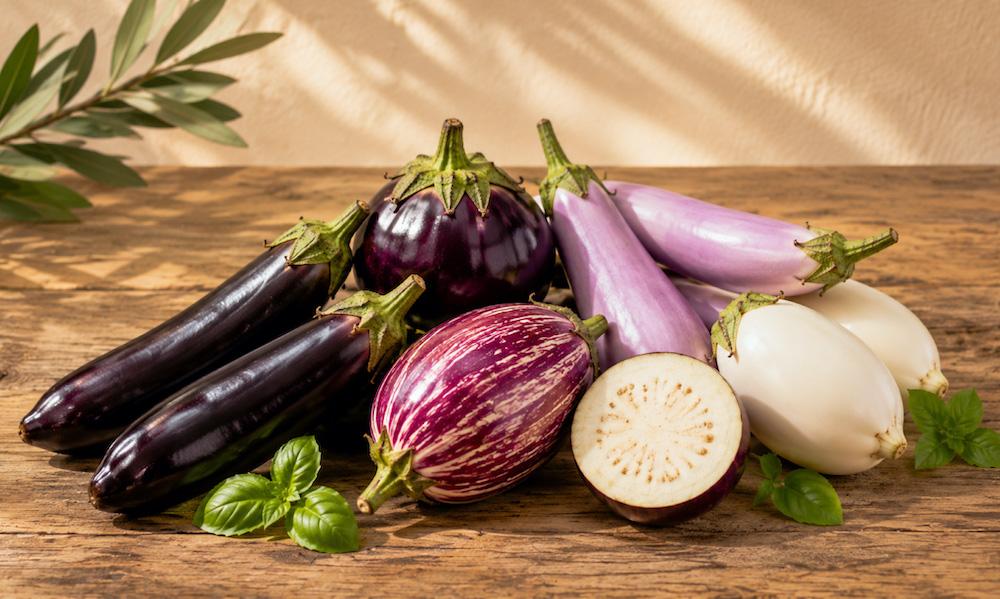
When we think of aubergines, we often imagine the dark purple, long or round varieties. In reality, there are many different types in terms of shape, colour and texture. Some are long and slender, others round and fleshy, while others feature purple tones, light stripes or very dark, almost black shades.
Long aubergines are perfect for slicing and grilling, frying or making rolls. The round varieties, being fleshier, are ideal for baked dishes, parmigiana and layered recipes. Smaller varieties, on the other hand, are well suited for pan cooking or more creative preparations.
Their strength lies in their adaptability: they can become soft and creamy, crispy when fried, intense when roasted, or fresh when paired with herbs and light seasonings.
Parmigiana: the great Italian classic
Among all Italian aubergine-based dishes, parmigiana holds a special place. It is a rich, generous and comforting dish made of layers of aubergines, tomato sauce, cheese and Mediterranean aromas.
Its origins are debated: some attribute it to Sicily, others to Campania, while the term “parmigiana” may refer to the layered structure, similar to shutter slats. Whatever its exact origin, aubergine parmigiana has become one of the most beloved dishes in Italian cuisine.
If you would like to prepare a traditional version, you can try our classic aubergine parmigiana, a rich and flavourful recipe perfect for a family meal or an authentic dinner.
Fresh and lighter aubergine dishes
Aubergines are not only associated with rich baked dishes. In summer, they can also become the star of fresh, light and quick recipes.
Our raw aubergine parmigiana is a perfect alternative, ideal as a starter or side dish, enhancing aubergines with fresh tomato, basil, extra virgin olive oil and grated cheese.
A spicy and original variation
Aubergines pair very well with spices. This makes them perfect for creative recipes where Italian tradition meets warmer and more aromatic flavours.
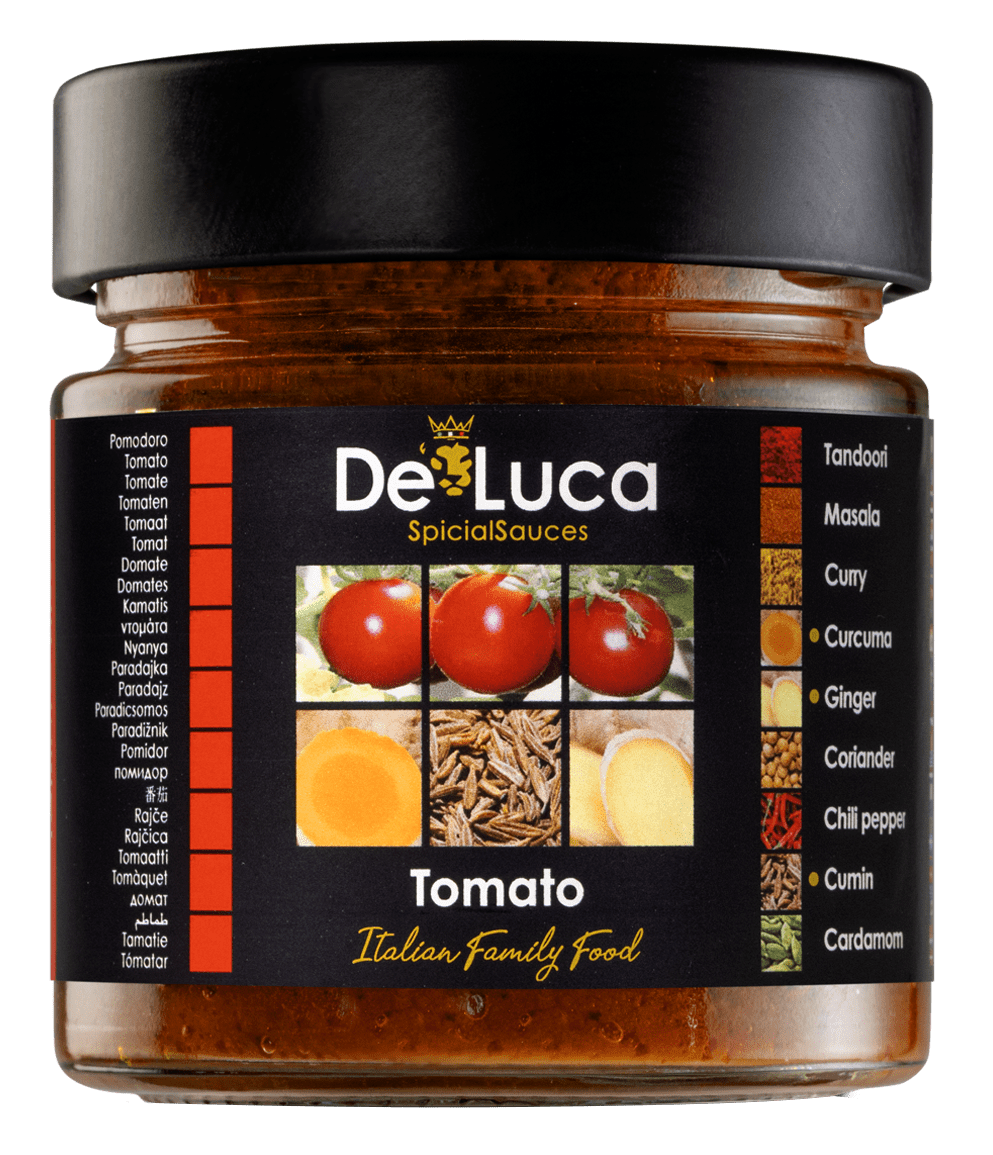
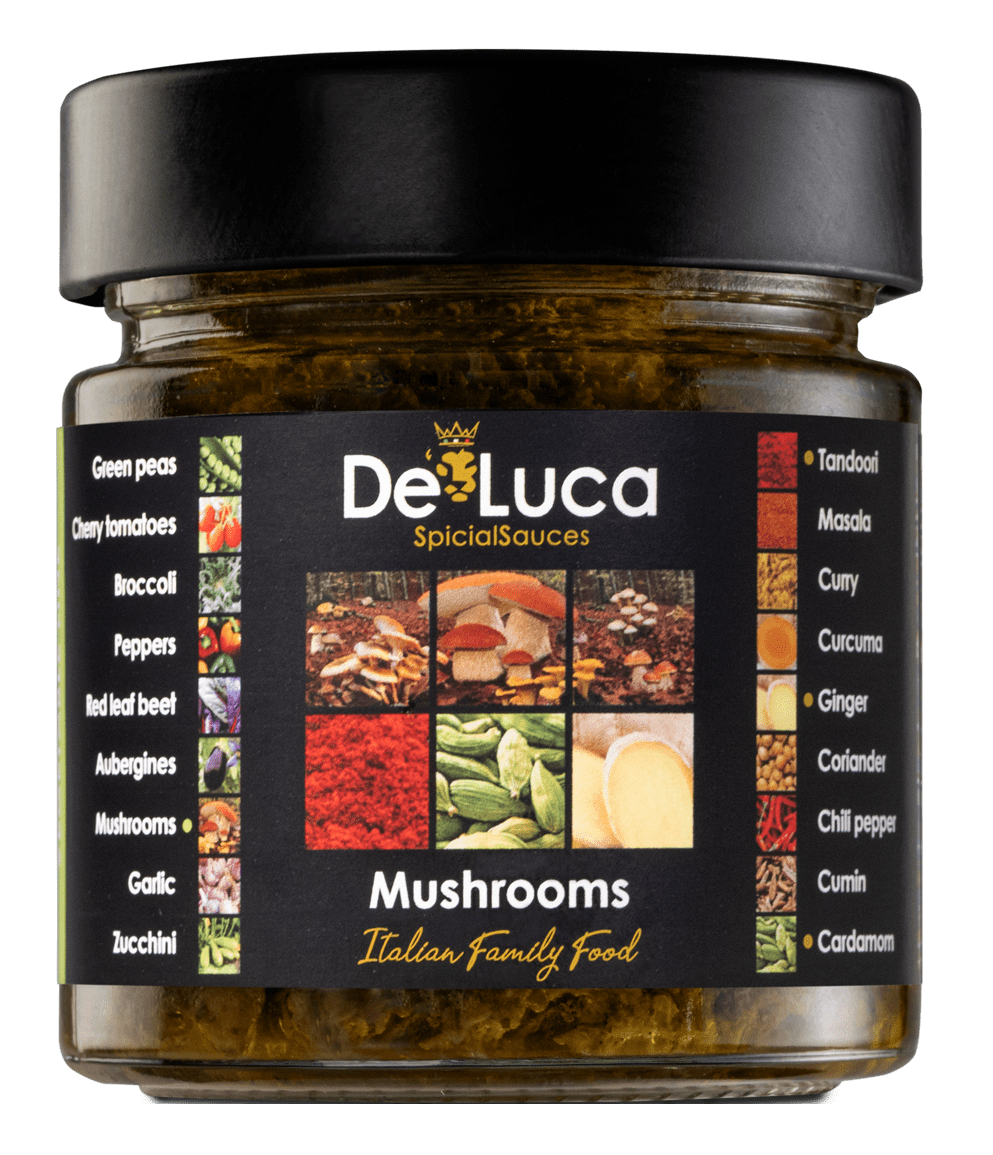
Our spiced aubergine parmigiana is based on exactly this idea: reinterpreting a classic dish with a more intense and original twist. In this recipe, you can use traditional tomato sauce or our Tomato De Luca Spicial Sauces, already flavoured with spices such as cumin, turmeric and ginger.
Grilled aubergines: Mediterranean simplicity
Sometimes, just a few ingredients are enough. Grilled aubergines with extra virgin olive oil, parsley, lemon, salt and pepper become a simple yet flavourful side dish.
Our grilled aubergines with parsley sauce are perfect served warm or at room temperature.
How to use aubergines in cooking
Choose firm, shiny aubergines without soft spots. They can be grilled, fried, baked, sautéed or turned into creams.
They pair very well with tomato, basil, parsley, garlic, lemon, cheese, breadcrumbs, olive oil and spices.
A simple vegetable, endless recipes
Aubergines perfectly represent the essence of Mediterranean cuisine: simplicity, versatility and authentic flavour.